Tag Archives: vincent price

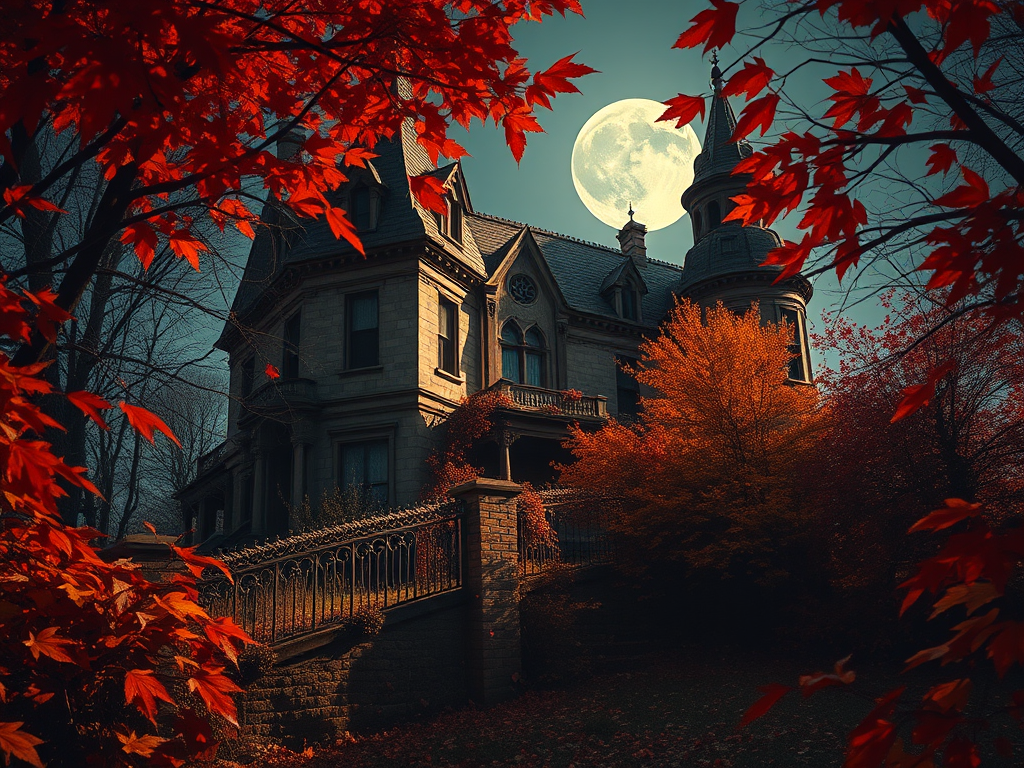
“Fall of the House of Usher” (1960) – More or Less Poe

This is one of my favorite entries from the Edgar Allen Poe cycle that director Roger Corman engaged in during the 1960’s. Granted some of the special effects appear a little two dimensional and there is the perfunctory dream/nightmare sequence experienced by one of the film players that is shot with color filters and diffusion to capture a horrific pre-waking stage but, in this instance, the effect is very strong and effective.

Vincent Price appears as Roderick Usher who inhabits a mansion on a gloomy stretch of land with his sister, Madeline. There is a malignancy that holds sway over the house, the family and the property. A history of corruption, madness and barbarism seems incorporated into the Usher bloodline. Roderick and his siter are merely carrying on this malaise through their rapidly advancing physical and mental ailments.

Madeline’s beau, Philip, appears at the Usher doorstep to escort his beloved away and off to married life. Roderick refuses to permit this as he fears his sister will succumb to her infirmities if “ushered” away, as it were. Therein lies a majority of the story’s conflict: a war of wills and sanity between the three central characters.

Very cool interior sets and a magnificent Price performance make this a worthy viewing experience even if the story doesn’t exactly conform to Poe’s short story.
“House Of Wax” (1953) – Gummed Up Wax Works

Fairly lively horror whodunit which follows a familiar refrain: a talented artist is victimized by his shady business partner who sets their waxwork museum on fire. The artist miraculously survives albeit horribly scarred and then plots his murderous revenge in the shadows of society. “Phantom of the Opera” used a similar story line but had a musical composer who covertly got even with his enemies.

Vincent Price is fine as the unfortunate sculptor who opens a new waxworks emporium that now concentrates on sensationalism and horror to draw in the crowds. To get the enterprise up and running in a short amount of time, Price employs the recently dead bodies of tragedies and his own murderous hand to cover with wax and represent both current event stories and historical incidents and characters of a diabolical nature. (See “A Bucket of Blood” (1959))

My main objection to the film are the smarmy, wooden characters that Price is surrounded by. The hero and heroine and authorities on the case are a bit bland and boring.

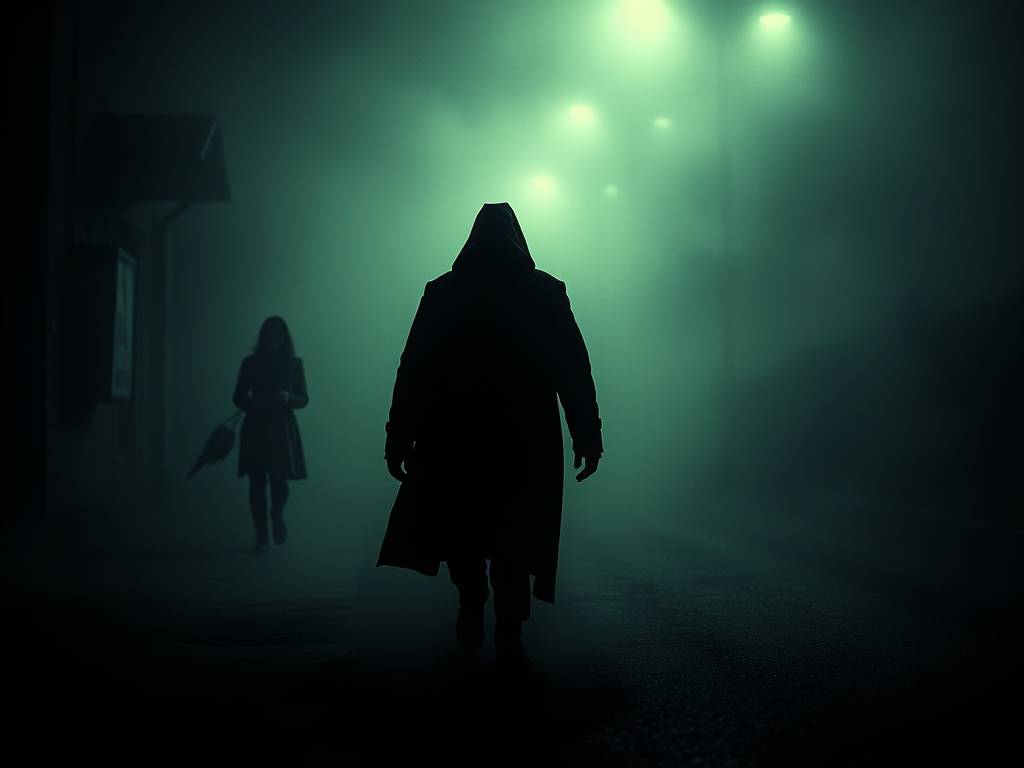
Adding to the gaudy spectacle of the film is the usage of the 3-dimensional shooting process that was a popular fad back when this movie was made. The theater barker’s paddle balls hitting you in the face certainly would give you a stiff neck as you tried to avoid their impact! That being said, the scenes of the crippled Price madman stalking the heroine in fog enshrouded streets does provide some atmospheric, horror chills.

“The Pit and the Pendulum” (1961) – Corman, Poe, Price, Camera/Filter FX Combo

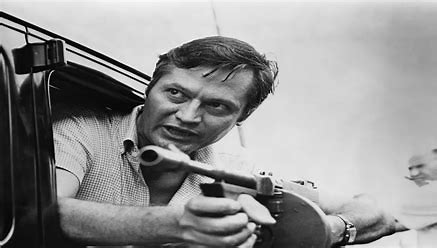
We sadly mark the passing of exploitation giant, Roger Corman: a tireless, budget minded producer/director who was creatively involved in some very memorable science fiction, horror, western and action genre pictures. Many of these movies have become classics and provide a blueprint of how to manufacture films quickly and cheaply without sacrificing all quality. I will reference “A Bucket of Blood” (1959) as being one such example of a low budgeted, though engaging story of a homicidal “artist” who finally runs out of luck. A very engaging movie.

It was in the 1960’s that Corman turned his attention to adapting (sometimes very loosely) some of the works of author Edgar Allen Poe.

“The Pit and the Pendulum” contained many elements of mood and directing that were reflected in his later Poe adaptions. We see a lot of swirling fog, cobweb infested dungeons, weird, distorted camera angles and lenses, colored filters engulfing the images, and dream/nightmare sequences that reflect the tormented minds of some of these films’ characters.

The resultant proceedings here are enjoyable but terrifying. Vincent Price truly turns in a twisted performance!

Seek this one out.

The Fire Still Burns: Vincent Price Movies That End With The Set Being Torched.

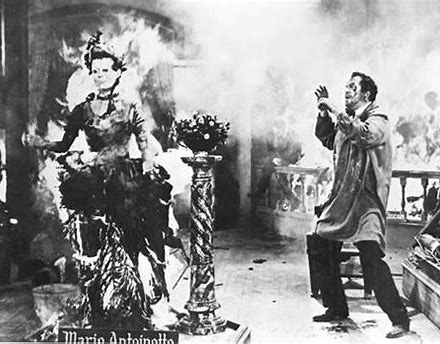
This is a trifle of a segment but I noticed recently while binge watching some Vincent Price scarefests that a lot of his films conclude with a purging fire breaking out and ridding the story of some of the evil situations and characters thus far encountered. Maybe it was a favored conclusion for director Roger Corman who concluded “The Fall of the House of User” (1960) and “The Haunted Palace” (1963) in such a fashion. It certainly is a flamboyant way to conclude a movie with the set catching fire and falling down into flaming pieces! Price or another actor invariably gets buried beneath a loosened beam or some similar fire engulfed material. It appears this method of demise began with Price’s mad sculptor getting immolated at the conclusion of “House of Wax” (1953). Corman didn’t direct that one but may have gathered inspiration from it.

Well, that’s all I’ve got. Go check these films out and luxuriate in the cleansing fires!

“More Dead Than Alive” (1969) – Worthy Thoughtful Western

I started watching this western and began thinking that it was playing out as another dated take on The Old West that we have seen in countless TV shows and repetitive movies. There was a soundtrack featuring a harmonica, a jailbreak out of a Federal prison, gunplay galore and even some Gatling Gun action. It struck me as being old fashioned in an age where the Western had been electrified and shaken up by a work like Peckinpah’s “The Wild Bunch”. How could filmmakers fall back on all the old, reliable cliches of The Western genre and expect the audience to even care?

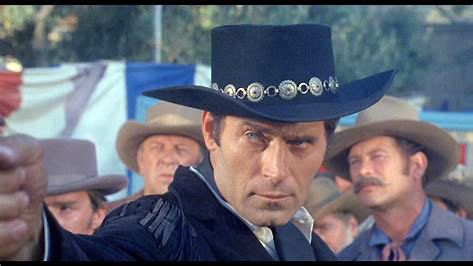
As it turns out, “Alive” and “Bunch” were released in the same year. I don’t know which, in essence, was seen first by the public but “More Dead Than Alive” impressed me as its story unfolded. Clint Walker plays a recently released convict known as Killer Kane who has spent 18 years in prison. As he sheds his shackles, he is left with an even more daunting sentence: What can a man convicted of multiple murders and who has only known life as an outlaw get by in this new world? What job will he be able to find, how will he live, how is it possible to shed the image the public has of him as being a person who has snuffed out others’ lives?

It proves to be a very hard ride for Walker who can’t keep even the most menial of jobs for long and is shunned by society in general as being a dangerous man.

Vincent Price has a nice appearance as a travelling sideshow operator who gladly invites Killer Kane to be his featured performer in Price’s Shooting exhibition. Even in this element of handling guns, Walker is met with strong opposition by the child like psychotic teenager Price was previously using as his featured shooting star.

Another similarity to “Bunch” is the observance of newly emerging technology such as a phone and bicycles. The times have certainly changed since Kane went to jail and the remaining movie chronicles his struggles to survive in his new environment and live down his bad name.

Definitely worth a viewing!

Vincent Price’s Dracula (1982) – Good Halloween Fare

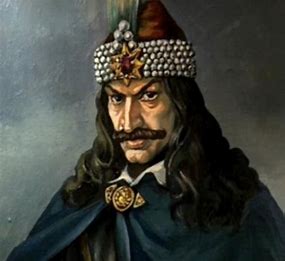
A documentary detailing the history of the vampire character Dracula, assembled using various movie clips and the narration of horror icon, Vincent Price.  You’ll see clips from the silent “Nosferatu” and other cinematic appearances featuring the ancient blood sucker such as Lugosi in “Mark of the Vampire”, and the 1950’s alternative vampire film, “The Vampire” .  “VPD” is a good flick to curl up by the fire to watch as we come upon the Autumn season and move closer to Halloween.  Heavy on the garlic fries.  Hehe.

THE PIT AND THE PENDULUM (1961)

th (6)


Creepy interpretation by Roger Corman of Edgar Allen Poe’s The Pit and the Pendulum.  Richard Matheson scripted this adaptation.  Vincent Price adds his diabolical presence.  Love the creaking of the pendulum as it winds its way down toward the intended victim.  Part of Corman’s Poe cycle of film adaptations.  Nice 60’s horror atmosphere.